

Liesegang rings in historic lime
Discover the fascinating chemical phenomena behind concentric ring patterns on period walls, why they occur in historic masonry, and how to remedy them using authentic traditional lime methods.

What are Liesegang circles?
Named after the German chemist Raphael E. Liesegang who observed them in 1896, Liesegang rings or circles are periodic precipitation patterns seen in historic masonry and old plasterwork, they appear as rhythmic, concentric bands or wavy halos spreading across walls.
Rather than being mere surface dirt, they are internal chemical reactions occurring directly inside the porous substrate.
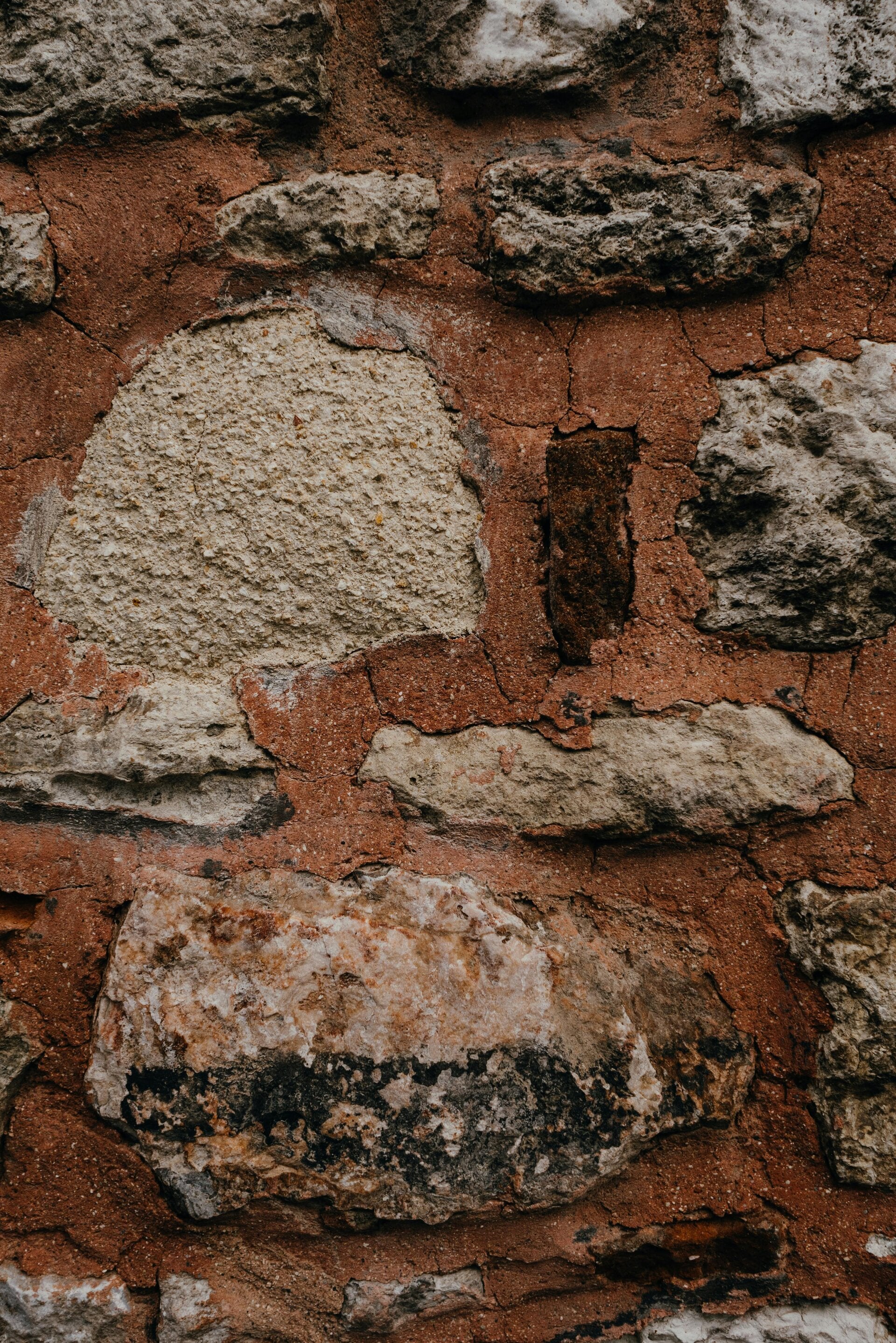
The chemical mechanism in lime and stone
When soluble salts and mineral-rich moisture migrate through porous traditional lime plaster or sandstone, diffusion takes place.
As two opposing chemical solutions meet, supersaturation occurs at rhythmic intervals.
Once critical thresholds are crossed, precipitation precipitates out in rhythmic, banded concentric circles, leaving distinct salt and mineral halos permanently set within the matrix.

Remediation: remove and refinish in lime
Because Liesegang banding develops deep within mineral layers, surface washing or standard paints will never resolve the issue and often trap damaging moisture.
The correct conservation procedure is to carefully remove the compromised plaster sections, allow the wall to dry out naturally (No dehumidifiers!) and refinish using traditional lime and limewash.