

The stag beetle
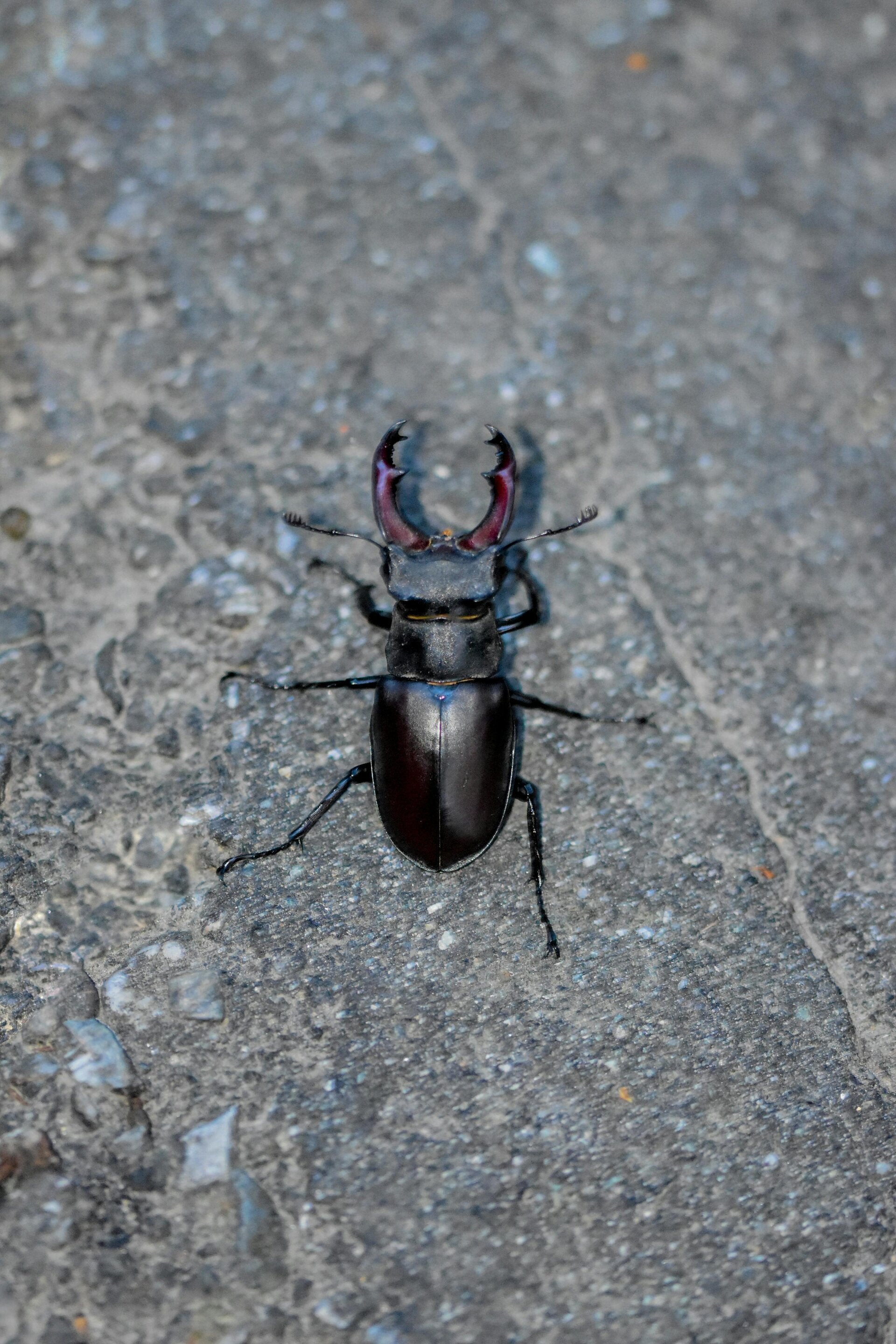
At No1, as the 'big boys of the beetle world', are stag beetles.
They are magnificent creatures intrinsically linked with ancient deadwood and woodland habitats. Understanding their biology offers invaluable insight into historic timber care and building conservation.
The giants of the beetle world
With their formidable antler-like mandibles and impressive stature, stag beetles are Britain's largest terrestrial insects.
Far from being aggressive pests, these harmless giants play a vital role in natural woodland ecosystems, spending years as larvae feeding exclusively on subterranean, decaying hardwood before taking flight on warm midsummer evenings.

Moisture, paint, and timber decay
Unlike pests that attack sound timber, wood-boring insects seek out wood that is already soft, damp, and decaying.
For owners of historic and listed buildings, the crucial lesson is simple: never coat external timber frames in impermeable modern paints or plastic barriers.
These coatings trap moisture within the wood, creating the damp, rotting conditions that invite serious decay.

Protecting historic timbers naturally
Historic timber frames rely on breathability to remain robust across centuries. Keeping joints dry, repairing gutters, and allowing timber feames to exchange moisture freely preserves your building's fabric while supporting natural biodiversity outside.
The fashion of biscuit tin photos of timber framed buildings with white painted panels, black painted frames, and a thatched roof are not at all necessary anymore! (They never were)
If you think that woodworm is a problem, just imagine what these can do, and as usual, you don't need chemicals!
Another good reason to manage your moisture levels correctly:
The following video is a good one.