

Scientific mortar analysis and constituent testing
Understanding the precise binder-to-aggregate formulation of historic masonry is vital for conservation. Through controlled dissolution, acid digestion, and microscopic grading, we separate original lime mortars and lime plasters from modern Portland cement additions. Learn our scientific breakdown process or write to us with clear photographs and physical samples to receive a comprehensive constituent analysis report.

Acid digestion and binder dissolution
Historic lime mortars are composed predominantly of calcium carbonate (calcite) bound to selected sand aggregates. To break down a sample, we utilise dilute hydrochloric acid (typically 10% to 15% HCl). The calcium carbonate reacts vigorously, releasing carbon dioxide gas and dissolving completely into water-soluble calcium chloride. In stark contrast, modern ordinary Portland cement contains complex calcium silicates and aluminates which leave a characteristic gelatinous silica residue when treated with acid, allowing us to clearly distinguish non-hydraulic and hydraulic lime from damaging modern cement repairs.
Aggregate grading and constituent separation
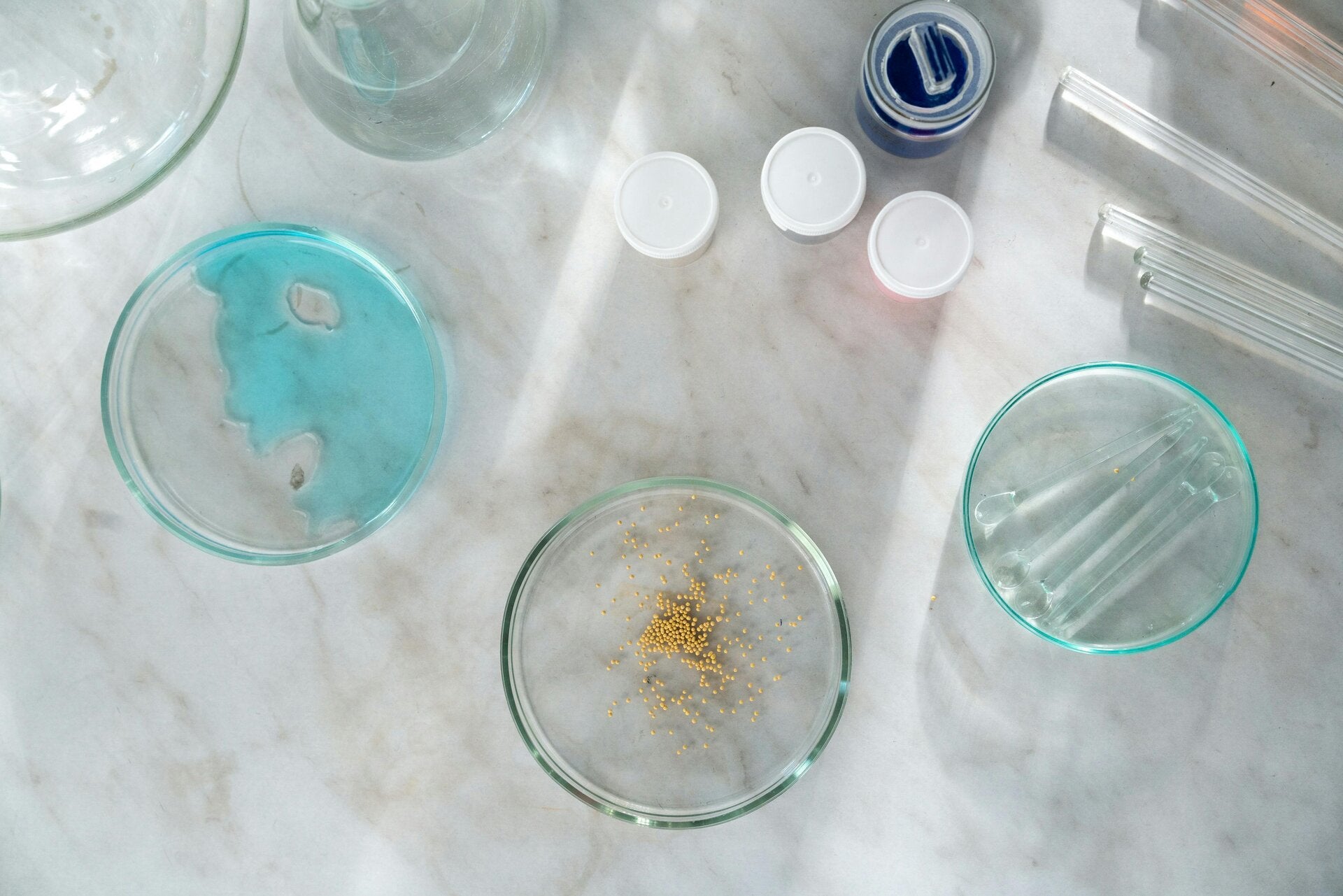
Once the binder matrix is chemically dissolved, the insoluble aggregate residue is thoroughly washed with distilled water, dried in an oven, and weighed to deduce the exact binder-to-sand ratio. The clean aggregates are then passed through a calibrated series of analytical brass sieves—ranging from 2.0 mm down to 63 microns. This physical classification establishes the particle size distribution curve, revealing whether the original builders used sharp river pit sand, crushed limestone, sea aggregates, or pozzolanic additives such as crushed brick dust and coal slag.

Organic analysis and commissioning your sample report
Traditional lime plasters frequently contain organic reinforcement including animal hair (horse, goat, or ox), tallow, or plant fibres. These delicate inclusions are identified under stereomicroscopy prior to full chemical digestion. If you suspect inappropriate cementitious renders on your listed building, write to us. Begin by submitting high-resolution photographs of the wall in context, followed by solid representative samples about the size of a matchbox. Our specialists conduct thorough laboratory breakdown testing and produce an exhaustive technical report detailing binders, aggregates, and historic matching mix specifications.