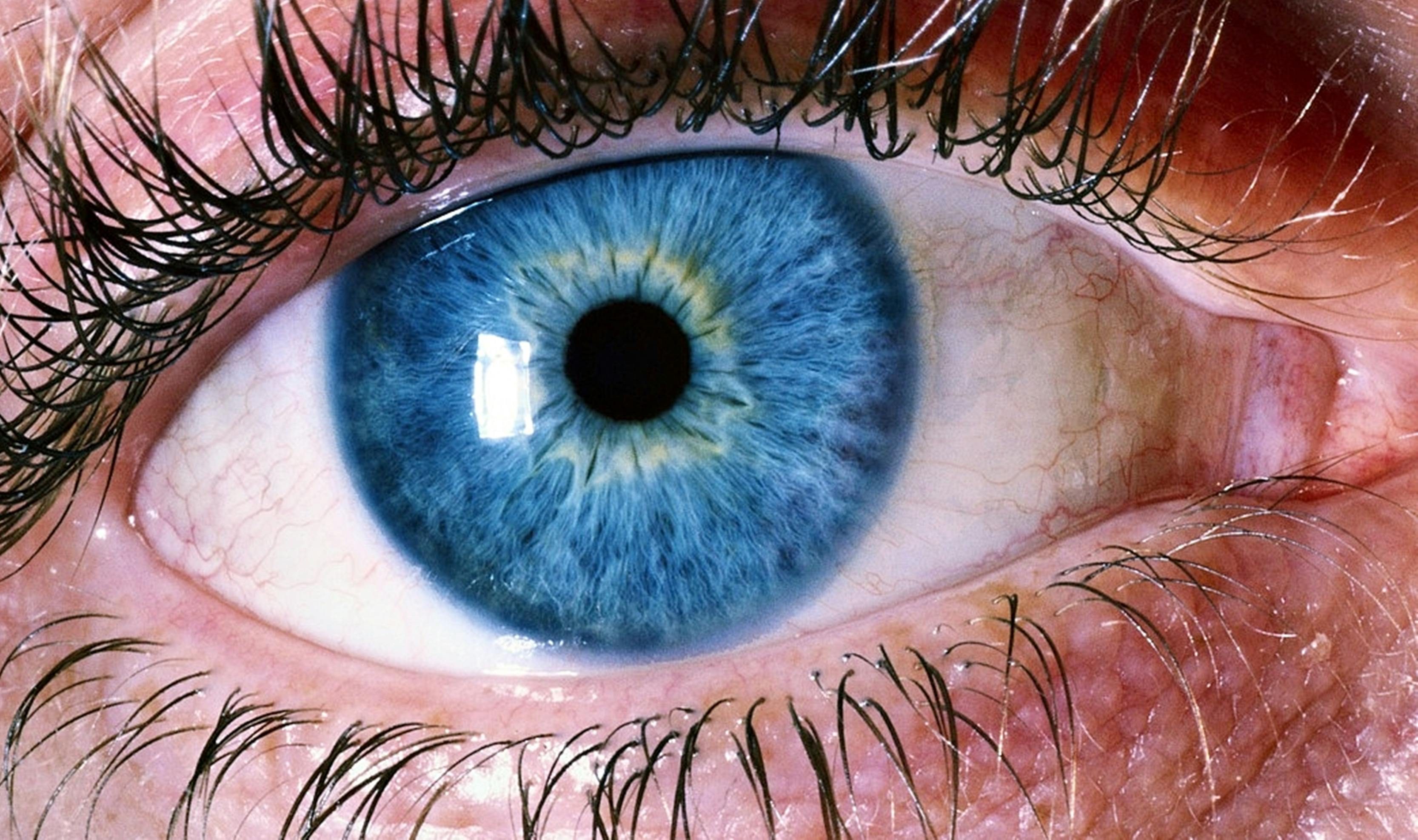
Unveiling the blue of the world
Have you ever wondered why the sky is blue, or why distant mountains sometimes appear hazy? This natural phenomenon, known as Rayleigh scattering, plays a crucial role in how we perceive colour and light in our environment. Understanding it can offer new insights into the science behind everything from our atmosphere to the materials in historic buildings.

What is Rayleigh scattering?
In simple terms, Rayleigh scattering is the scattering of light by particles much smaller than the wavelength of the light itself.
This phenomenon is named after the 19th century british physicist John Willam Strutt (November 1842 - June 1919) who was the Baron (Lord) of Rayleigh, and Chancellor of Cambridge University.
Think of it like this: when sunlight, which contains all the colours of the rainbow, enters Earth's atmosphere, it encounters tiny particles like nitrogen and oxygen molecules. Blue light, with its shorter wavelength, is scattered more efficiently by these small particles than red light, which has a longer wavelength. This scattered blue light is then dispersed across the sky, making it appear blue to our eyes. What's all this then?

Why does it matter for old buildings?
While often associated with the sky, Rayleigh scattering also applies to other everyday oblects, such as BLUE EYES.
Understanding principles of how light interacts with materials is also important in traditional buildings, for example understanding how light scatters within the minute structures of pigments, plasters, and even the dust on surfaces can reveal insights into their original appearance, degradation, and the subtle ways they interact with light over time. This knowledge is valuable for all those thinking that restoration is just a word! and anyone genuinely curious about the real science behind preserving our architectural heritage.

Beyond the blue horizon
Whether you consider yourself to be an expert conservator o, a student of physics, or simply a curious individual, this exploration of Rayleigh scattering invites you to look at the world with fresh eyes. Consider the profound connection between the blue of the sky, BLUE EYES, and the subtle blues in a weathered façade. It really should make you think: Blue eyes? Blue sky? Dive deeper into the fascinating world of light and materials. Stop assuming, and think instead